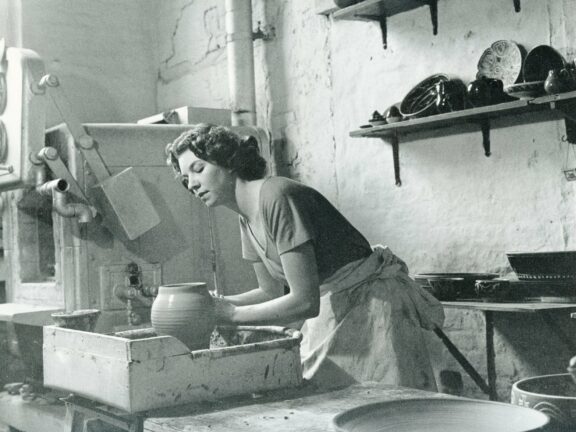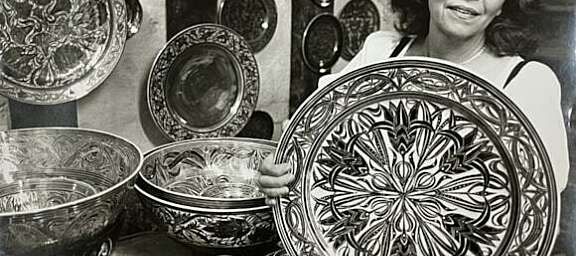
The programme, 'Celebrating Julia Carter Preston, Ceramicist' starts on Fri 11 Sep, and will include a symposium looking at her art and its significance to postwar British ceramics.
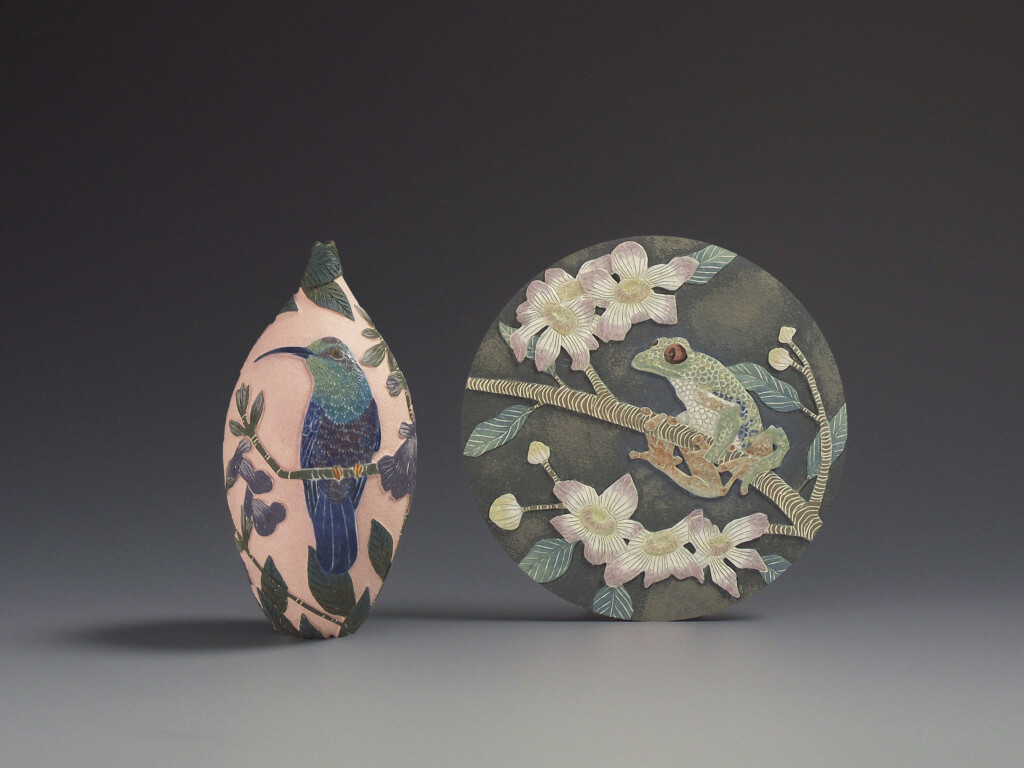
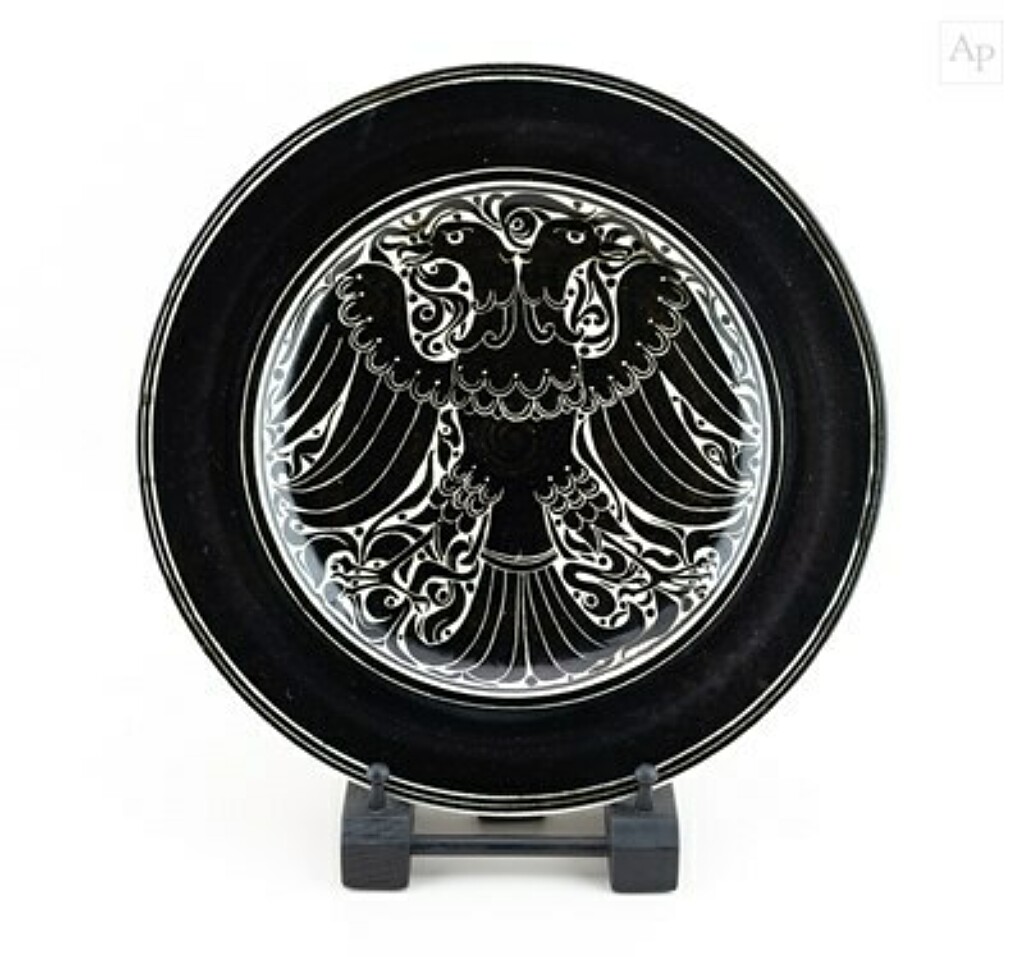
Julia Carter Preston was recognised for the role she played in reviving the technique of sgraffito in the twentieth century. With ancient origins and popularised in Renaissance Italy, sgraffito involves scratching through a coating of clay slip on a surface to reveal an underlying layer, creating contrasting decoration.
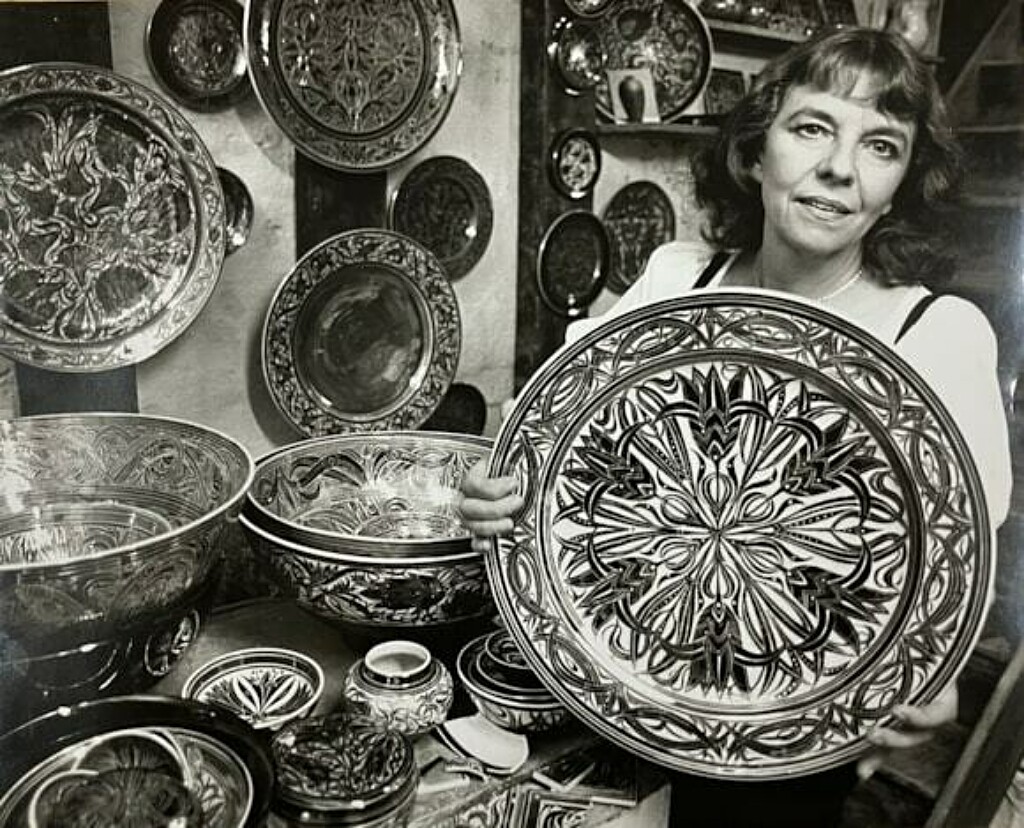
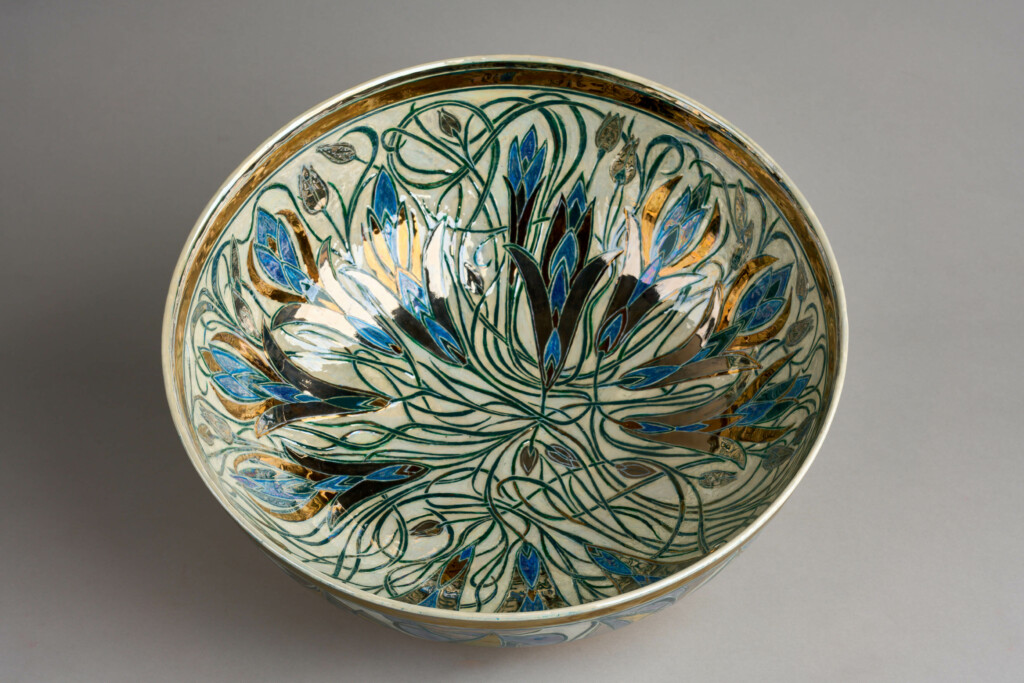
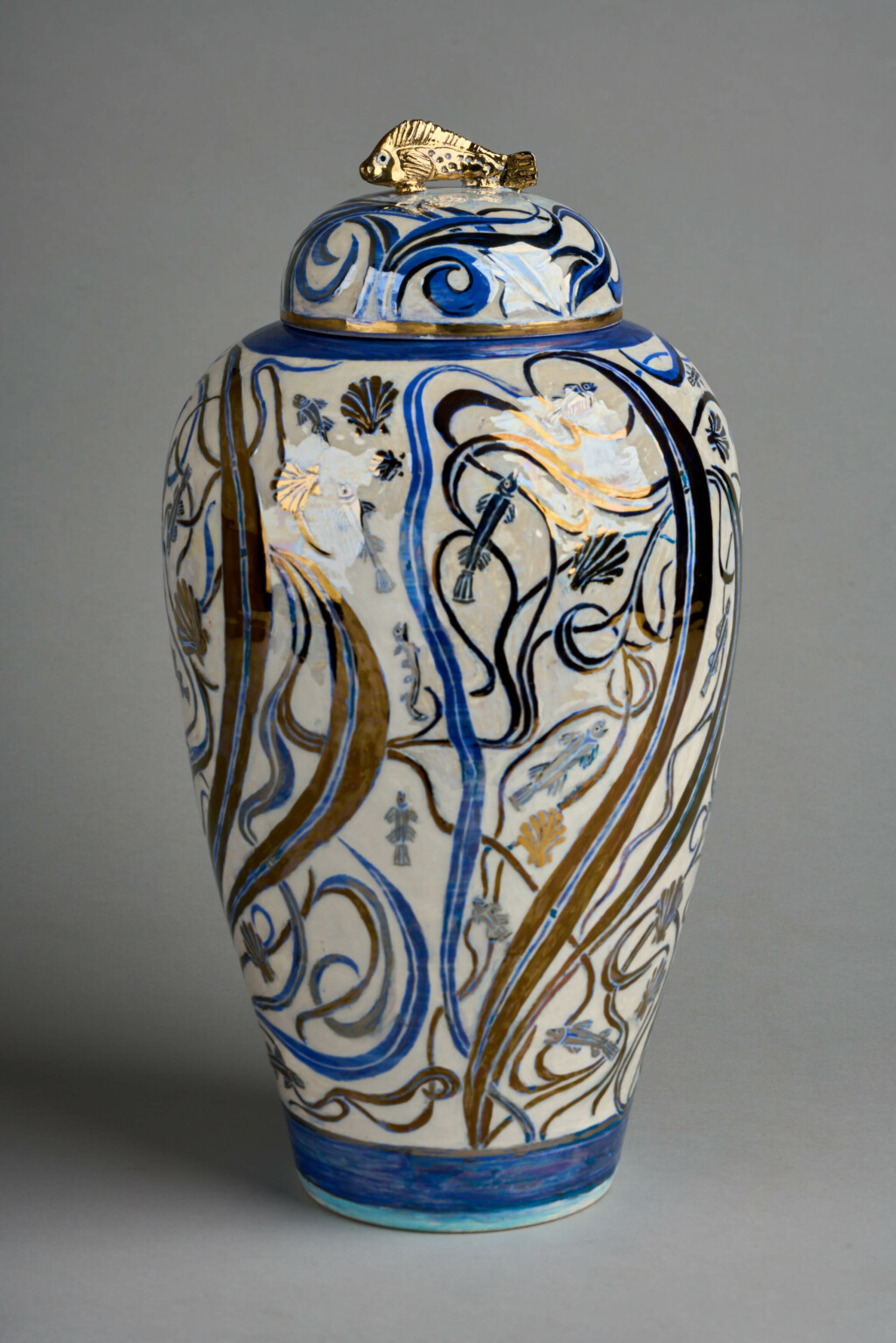
Carter Preston used this technique to brilliant effect, often using metallic lustre glazes on a wide range of ceramics – bowls, plates, jars, tiles, even a complete dinner service. She was in great demand, commissioned to create plaques and other pieces to commemorate anniversaries or celebrate special occasions.
Carter Preston’s designs were characterised by flowing and intricate patterns based on natural forms that echoed the designs of William Morris and Islamic art. The centenary programme will highlight these influences as well as showing a continuing interest in the practice of sgraffito.
The programme
There will be a preview of the exhibitions on Thu 10 Sep, which will be open to the public from Fri 11 Sep, with most exhibitions running until the end of 2026. Further information about each exhibition will be available in a brochure and on the venues’ websites.
Carter Preston will be represented by two displays at the Bluecoat, where she had a studio overlooking the Garden for many years. A new archive exhibition will be on display in our Upstairs Gallery, featuring photographs, documents and plaques commissioned to mark anniversaries of the Bluecoat Society of Arts. Running alongside this, 'Made from Scratch' at Bluecoat Display Centre (until Sat 7 Nov) will bring together a selection of Julia’s work on loan from local collectors, alongside leading contemporary sgraffito artists, which expands the conversation into surface and pattern, with printmakers and jewellers exploring etching, texture and intricate design*.
At Liverpool Hope University’s Creative Campus there will be an exhibition of Julia’s ceramics and other material selected from the Liverpool Hope Carter Preston Foundation’s collection which is housed at the University and comprises work by Julia and her father, the sculptor Edward Carter Preston.
The Walker Art Gallery will showcase outstanding pieces of Julia’s work from the collection of National Museums Liverpool, acquired from the University of Liverpool, the Bluecoat Display Centre or through bequests by local collectors. The range of pieces in the display will illustrate Julia’s artistry and the development of her practice as a potter.
A display at the University of Liverpool’s Victoria Gallery & Museum (VG&M) will include two examples of Julia's stunning lustreware artworks - a lustre glaze bowl and a lidded jar with sgraffito figuring and lustre glazes, both from 2001 - alongside other highlights from the University's ceramics collection.
Made from scratch: a symposium celebrating Liverpool ceramicist Julia Carter Preston takes place at Liverpool Hope University’s Creative Campus on Sat 3 Oct and will include talks, films, discussions and a demonstration of the sgraffito technique. Further details and how to book will be available shortly.
The programme is coordinated and funded by the Liverpool Hope Carter Preston Foundation.
*Artists exhibiting at Bluecoat Display Centre alongside Julia Carter Preston include ceramics by Beth Elliot, Russell Martin, Sue Mundy, James & Tilla Waters, Lara Scobie, Tiffany Scull, Chris Turrell, Anastasia Zama, Molly Attrill, Jo Walker, Ali Tomlin and Judit Esztergomia; jewellery by Malcolm Appleby, Hannah Souter, Diana Porter; silversmithing and engraving by Bob Porter, Ruth Ball; prints by Dionne Marshall, Jennifer Nuttall.
Julia Carter Preston
Julia Carter Preston was born in Liverpool on 31 August 1926 and died in 2012. She was the daughter of Edward Carter Preston (1885 – 1965), a sculptor specialising in relief works, perhaps best known for a large series of sculptures for Liverpool Cathedral and for designing the Next of Kin medal awarded to people who died during World War One. Another Liverpool artist, the sculptor Herbert Tyson Smith, was Julia’s uncle. Her sister, Irene, was a noted silversmith and jeweller.
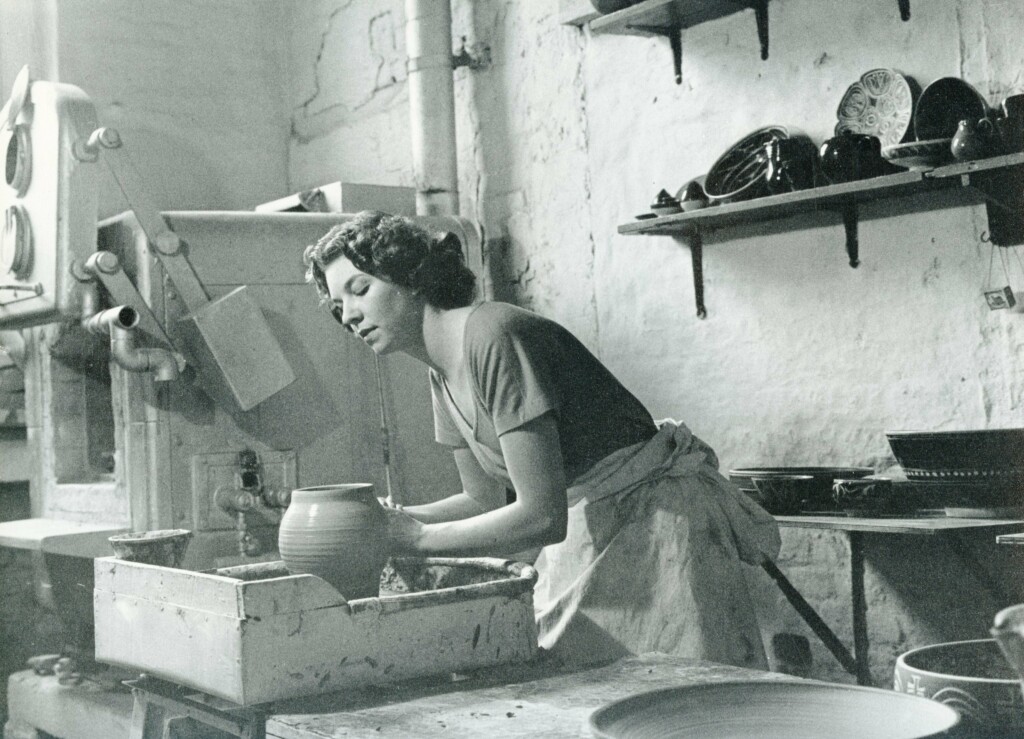
Julia studied at Liverpool School of Art, specialising in ceramics and gaining her National Diploma in art in 1951. She taught ceramics in various regional colleges, including Liverpool School of Art, where she became Head of Ceramics. Her career as a practising artist developed from the mid-1970s, working from her pottery studio at the Bluecoat where she exhibited regularly at the Bluecoat Display Centre.
Julia’s many commissions came from individuals, societies and public organisations and her work is in several public collections including the Smithsonian Institution in Washington, Ulster Museum, York Art Gallery and the Walker Art Gallery, Liverpool where she had a solo exhibition in 1999. She also exhibited at the Victoria and Albert Museum and was an official Wedgwood lecturer.