Getting started
I joined the Bluecoat in late October 2025, and after a few days of settling in and getting lost a few times, November was when I really started getting to know the Bluecoat archive.
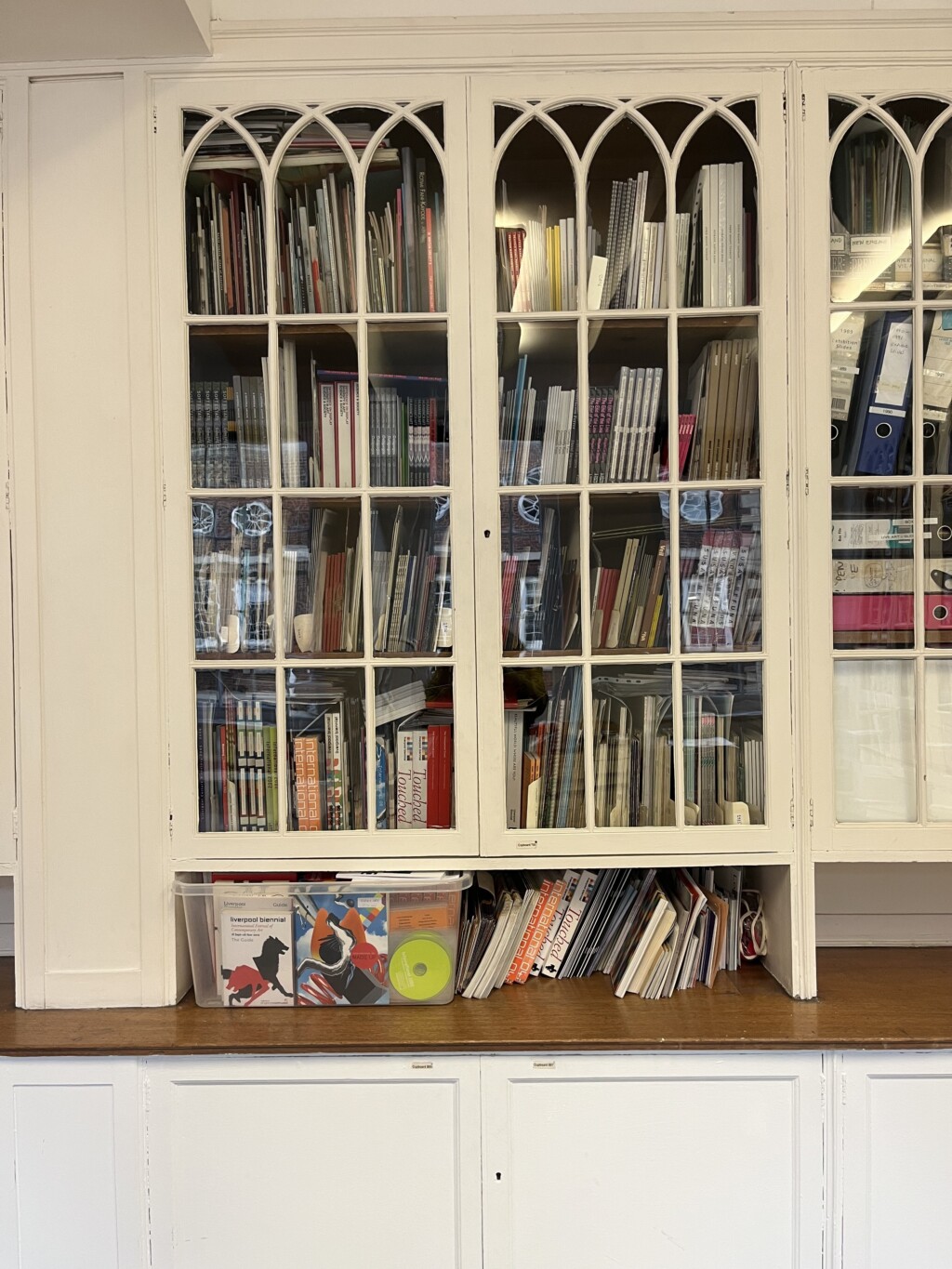
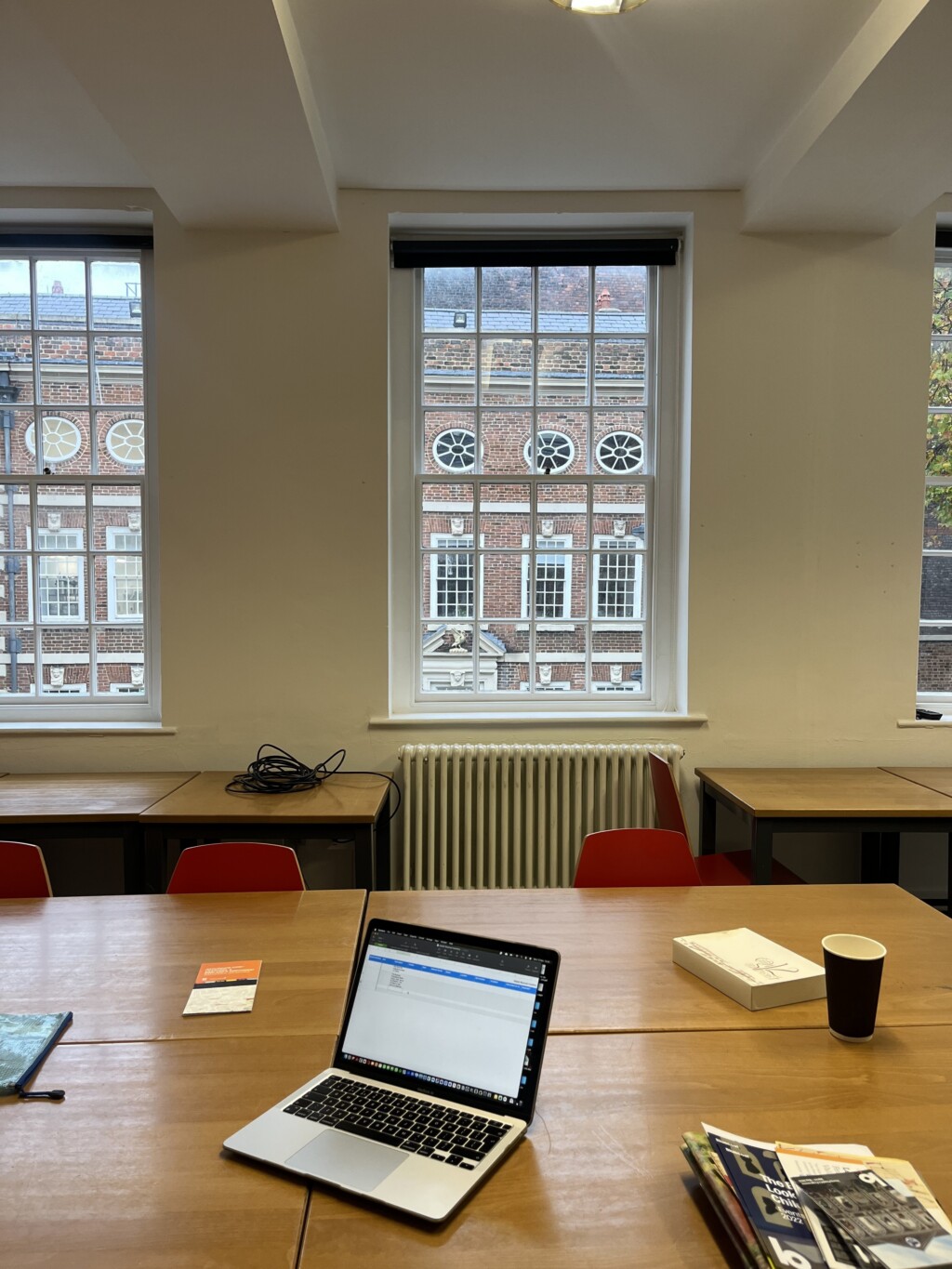
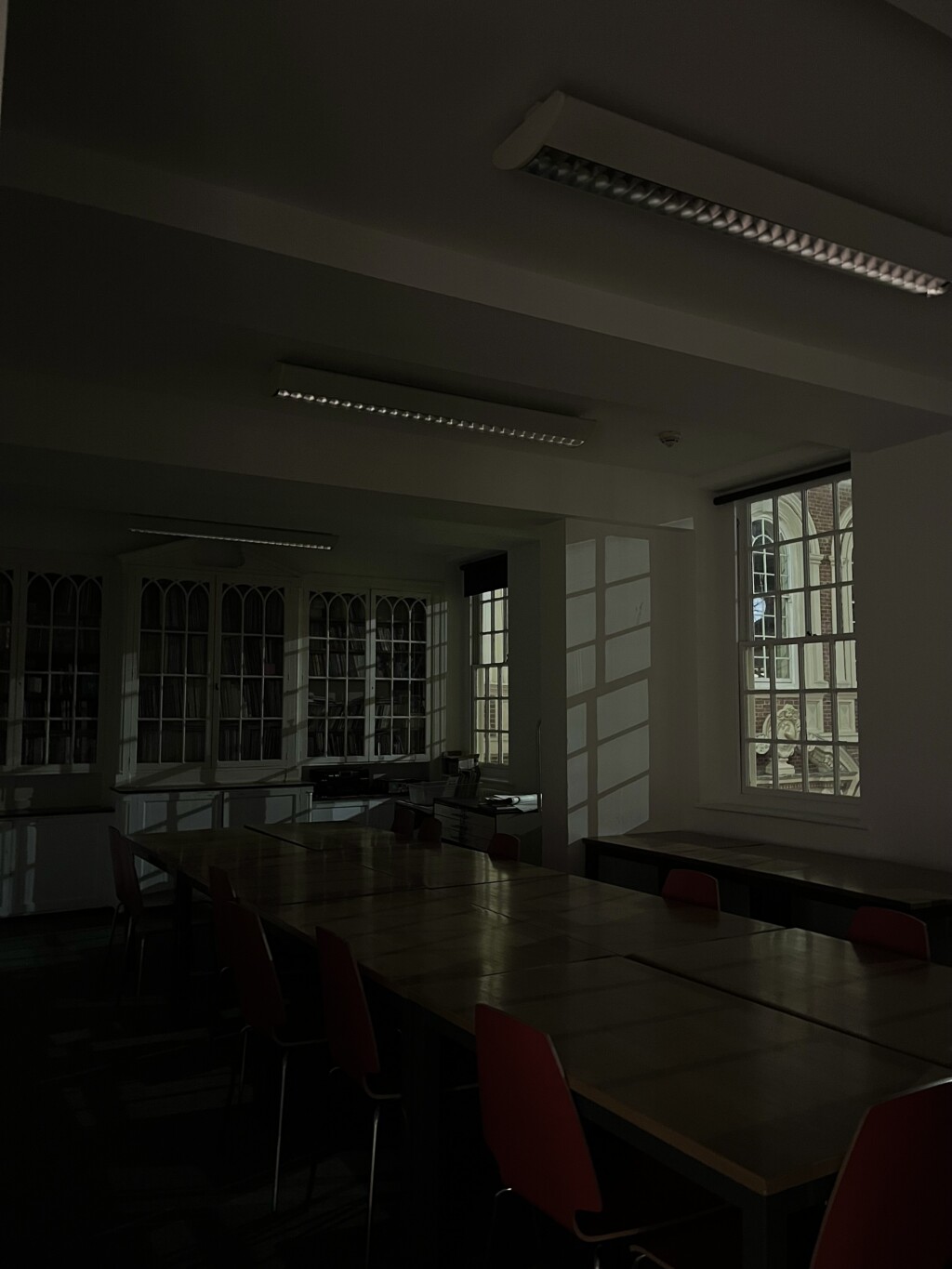
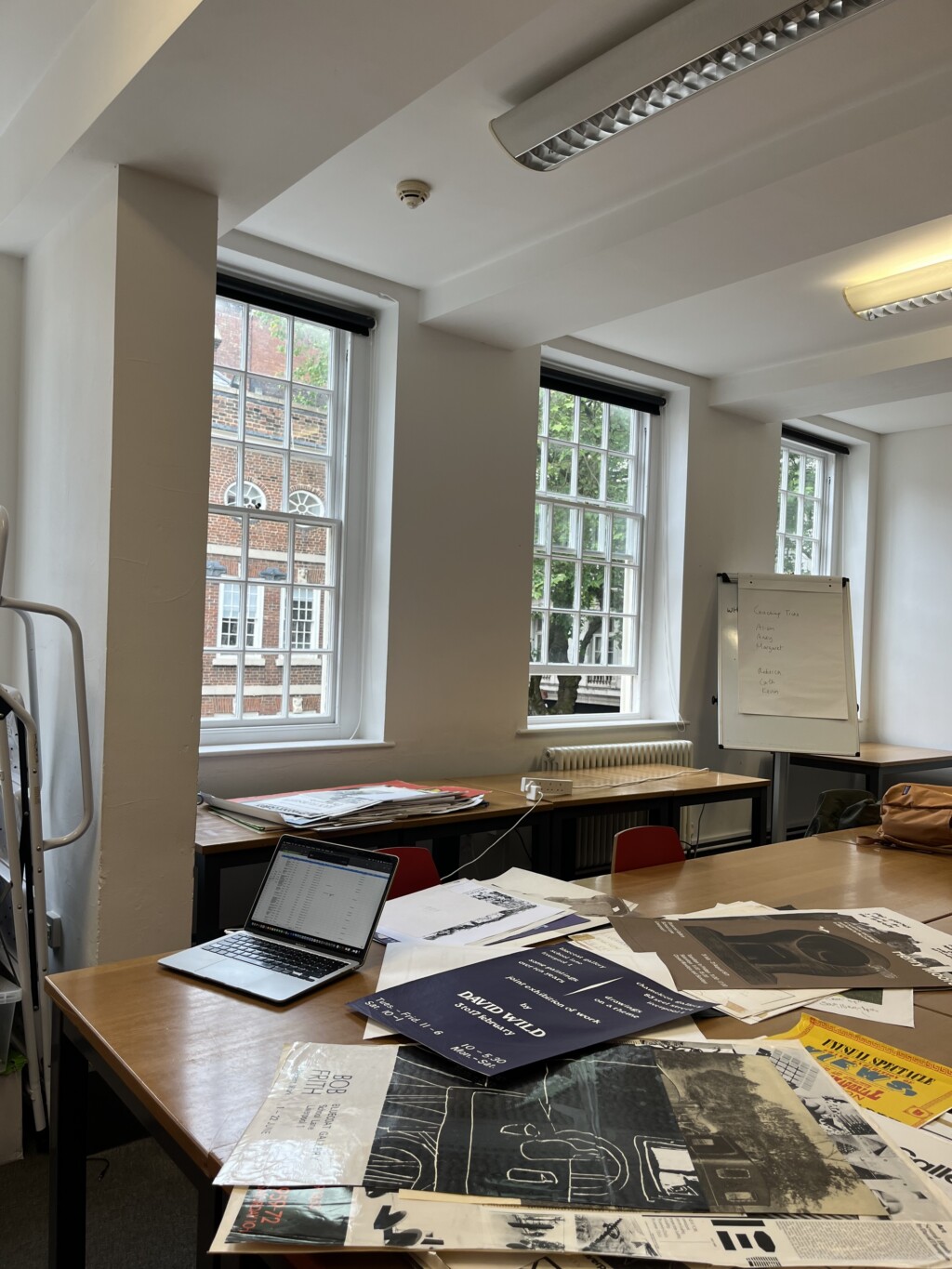
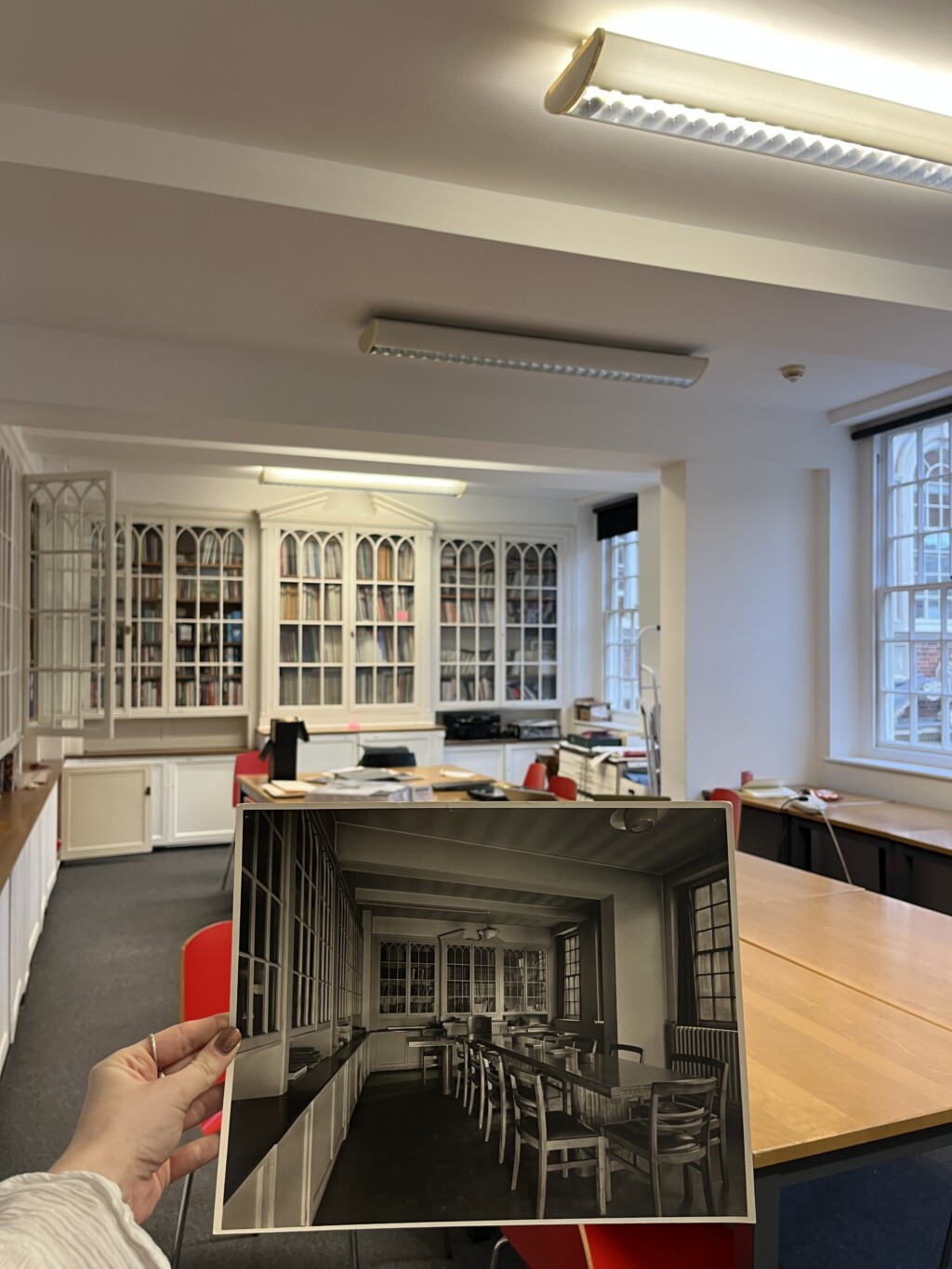
The archive is based in the Library, tucked away on the first floor in one of the oldest parts of the building. It’s a very cosy place to work, especially when the nights start drawing in, with three large sash windows to nosey out of. Peaceful too, apart from the buskers on Church Street who, while mostly good, are also very, VERY loud.
My first job was to work out what was here.
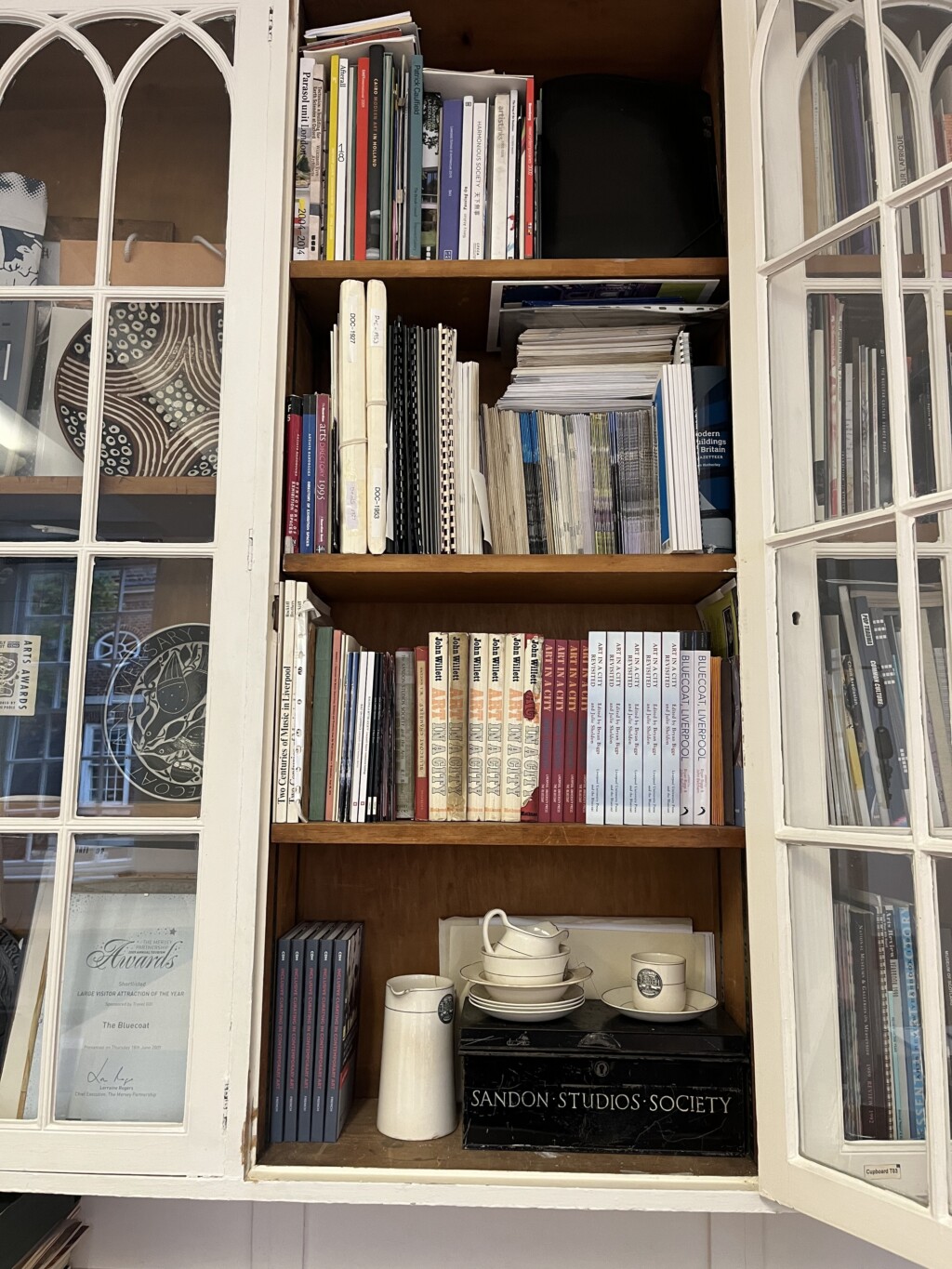
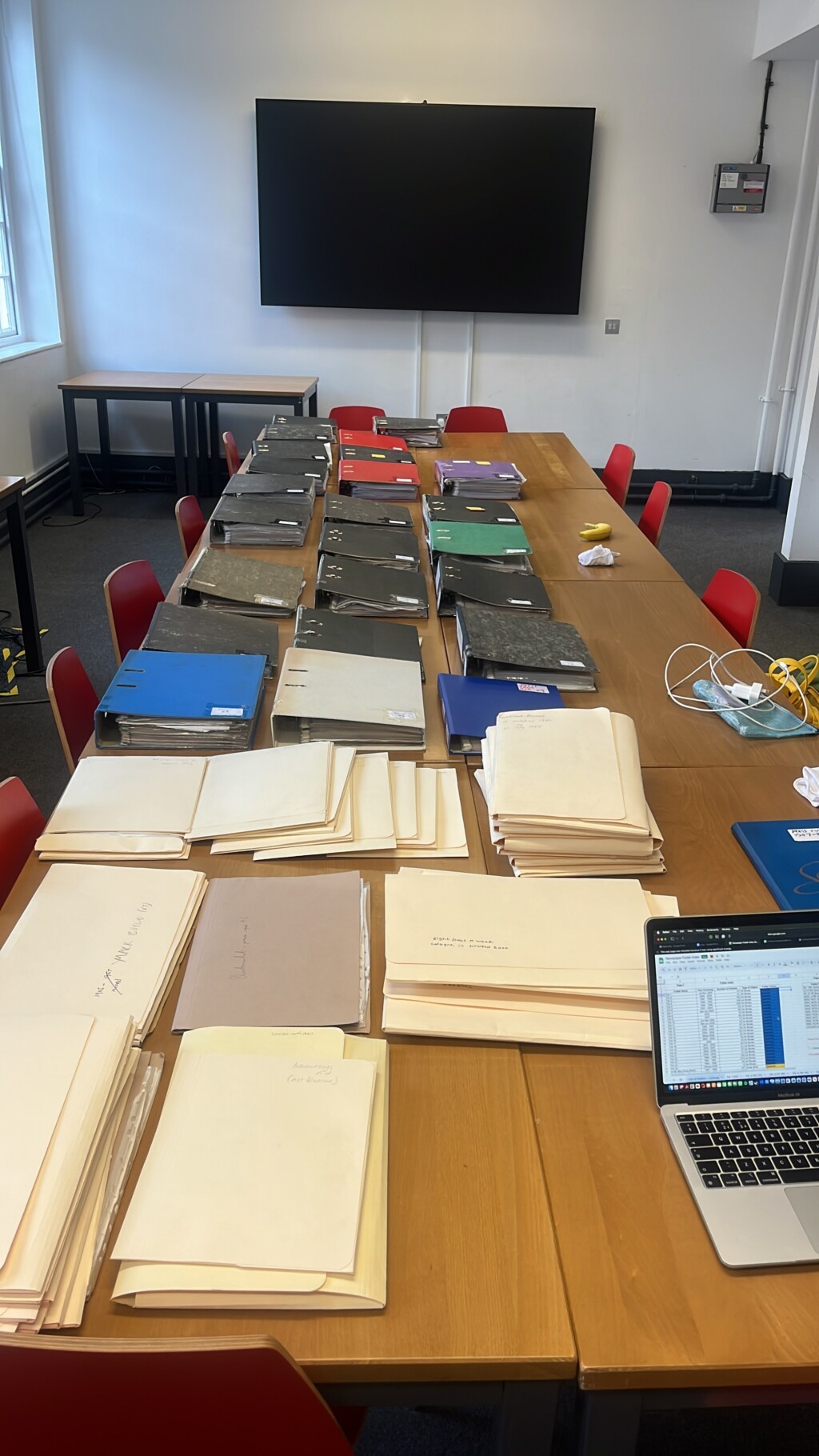
Bryan Biggs, the Bluecoat’s Director of Cultural Legacies, has been an integral part of Bluecoat for over 50 years, so his knowledge and experience were invaluable in helping me work through the collection. Box by box and file by file, we carried out a full inventory of the archive: what was there, how much of it there was, what condition it was in, and what we might eventually want to do with it.
Making sense
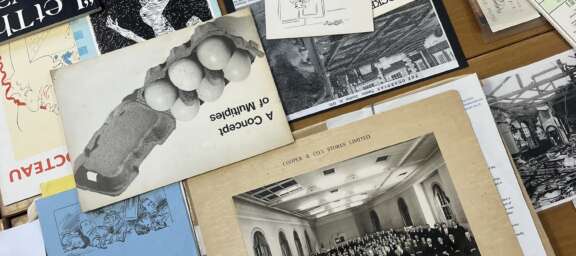
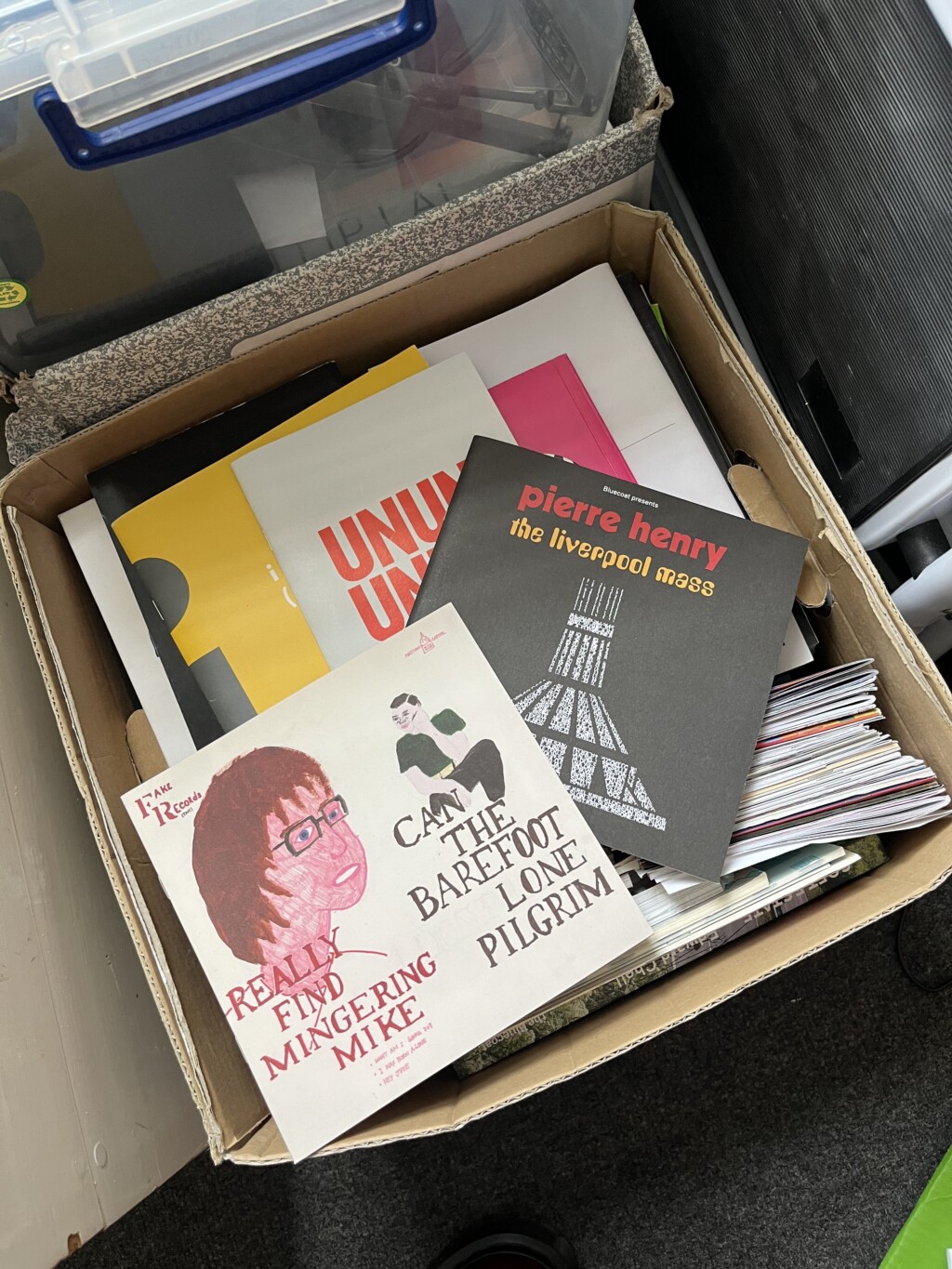
This surveying stage ended up taking up a large chunk of the project. Bluecoat has nearly 100 years of history as an arts centre, and its archive reflects just how much has happened here. Lots of the earlier material has already been deposited at Liverpool Record Office, so this project has mostly focused on the more contemporary collection of the last 60-odd years. As an arts centre, the archive is as varied as Bluecoat’s programme. There are records of exhibitions, performances, festivals, participation projects, and the many artists and organisations that have passed through the building, alongside posters, publications, photographs, slides, and more.
There were a few bumps along the way. I sprained my ankle in November and was kept away from the archive for most of December, so I used the time at home to start making sense of everything we’d already inventoried and thinking about how it could fit together into a catalogue. And, as the Library is still very much part of a busy working arts centre, sometimes a wedding or event takes priority and the archive work has to temporarily be put on hold.
By early summer, though, we finally had a good picture of the collection. After working with Liverpool Record Office, where much of the archive will eventually be deposited, we agreed a structure and the cataloguing could properly begin.
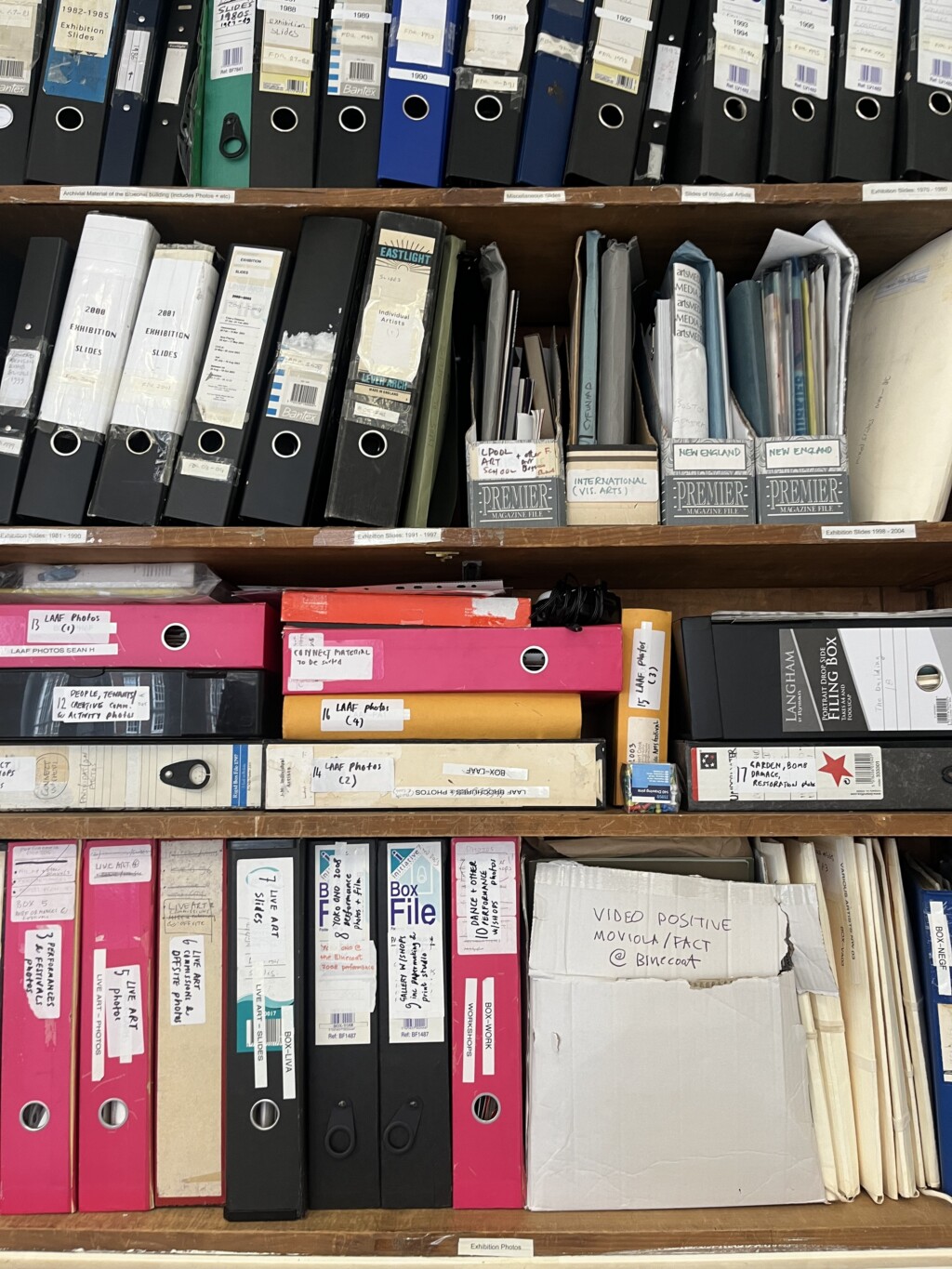
Grouping and cataloguing
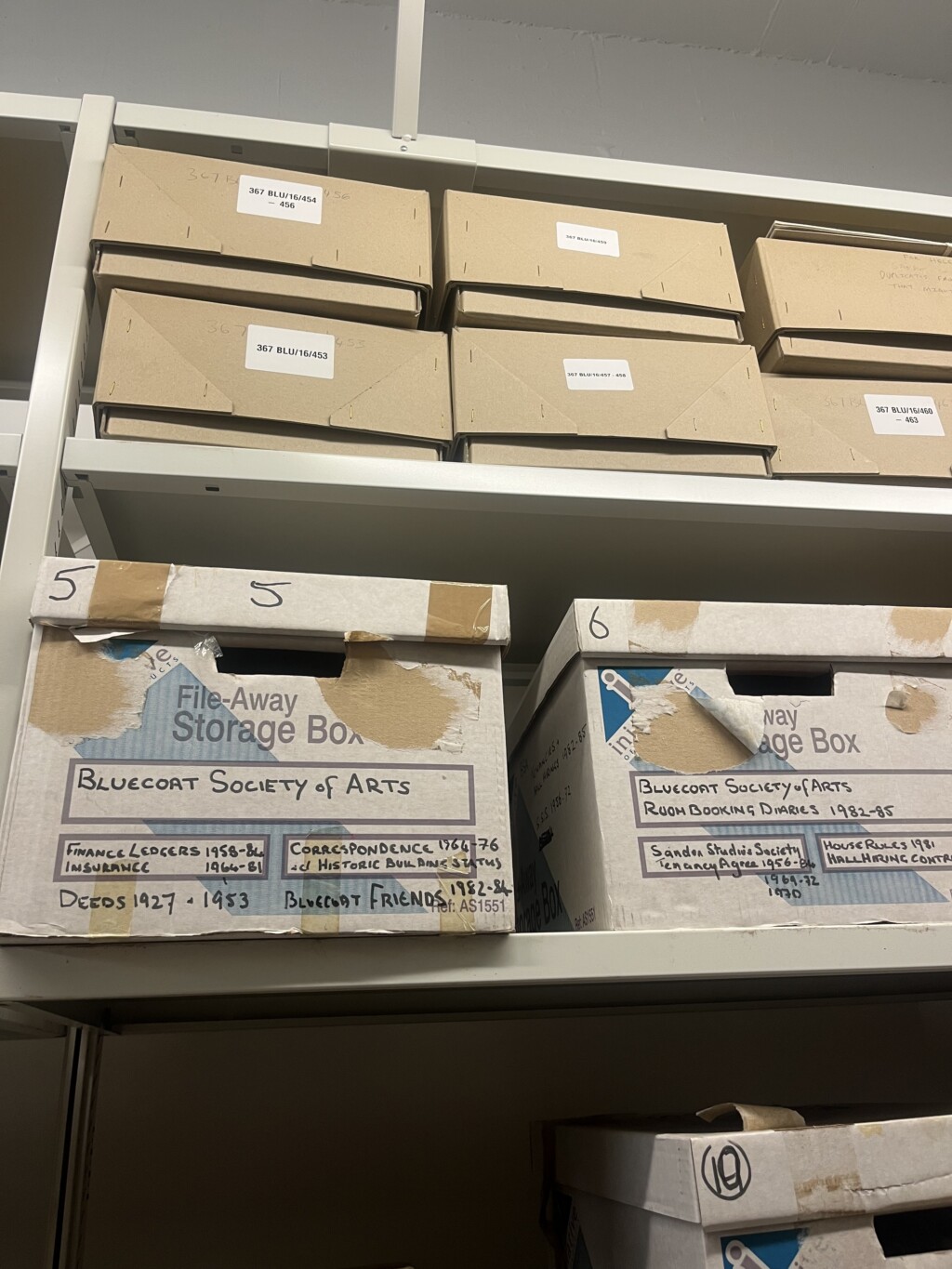
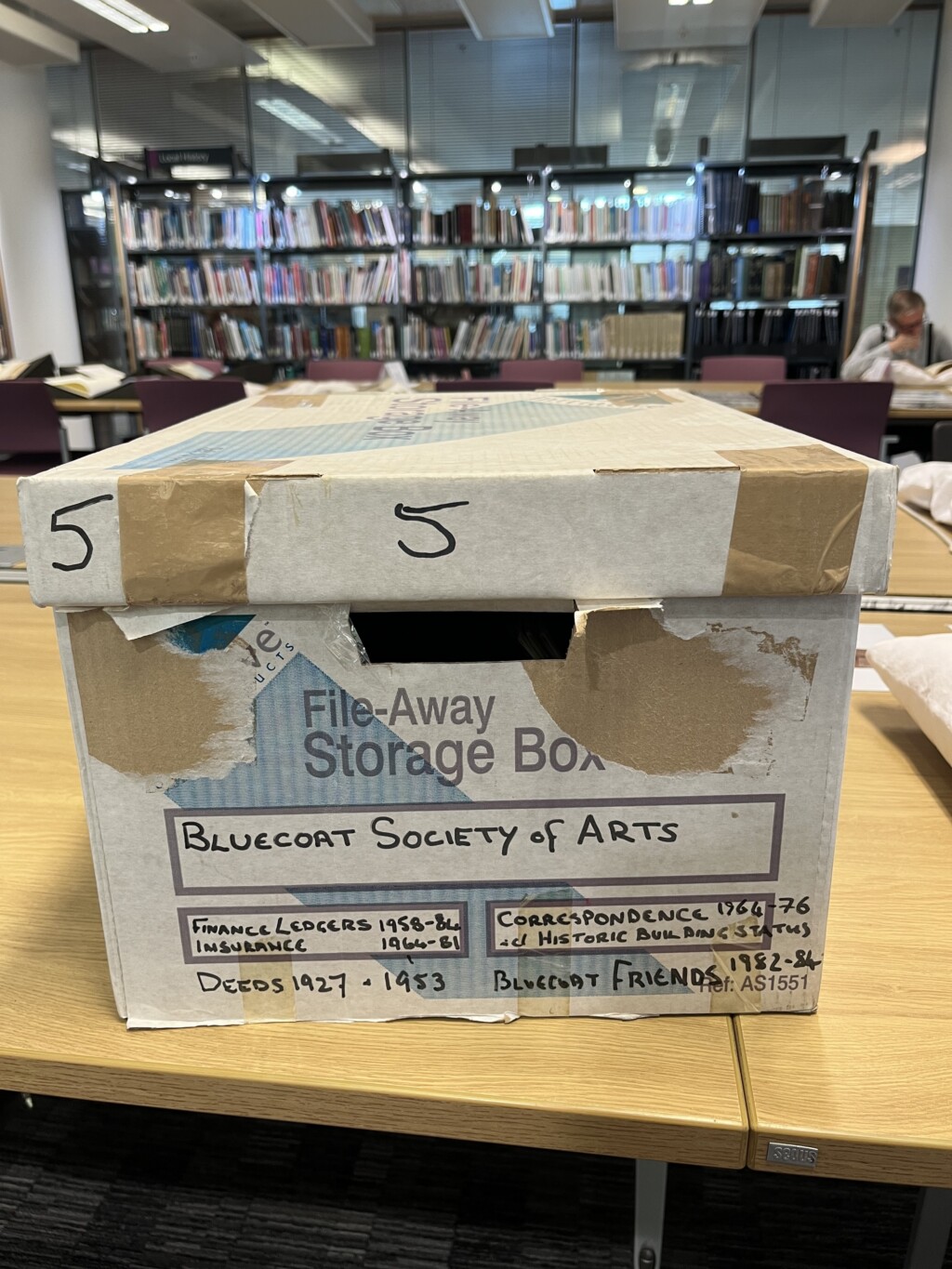
While visiting the Record Office to look at where the archive would eventually be housed, we discovered some previously deposited boxes that had yet to be catalogued. The bad news: more material to work out where to put! The good news: the boxes contained some very interesting records dating from the 1920s to the 1980s, covering everything from governance and finance to engagement, events, and the artistic programme. Luckily, we found them early enough to incorporate them into the new structure, ultimately making the collection even richer!
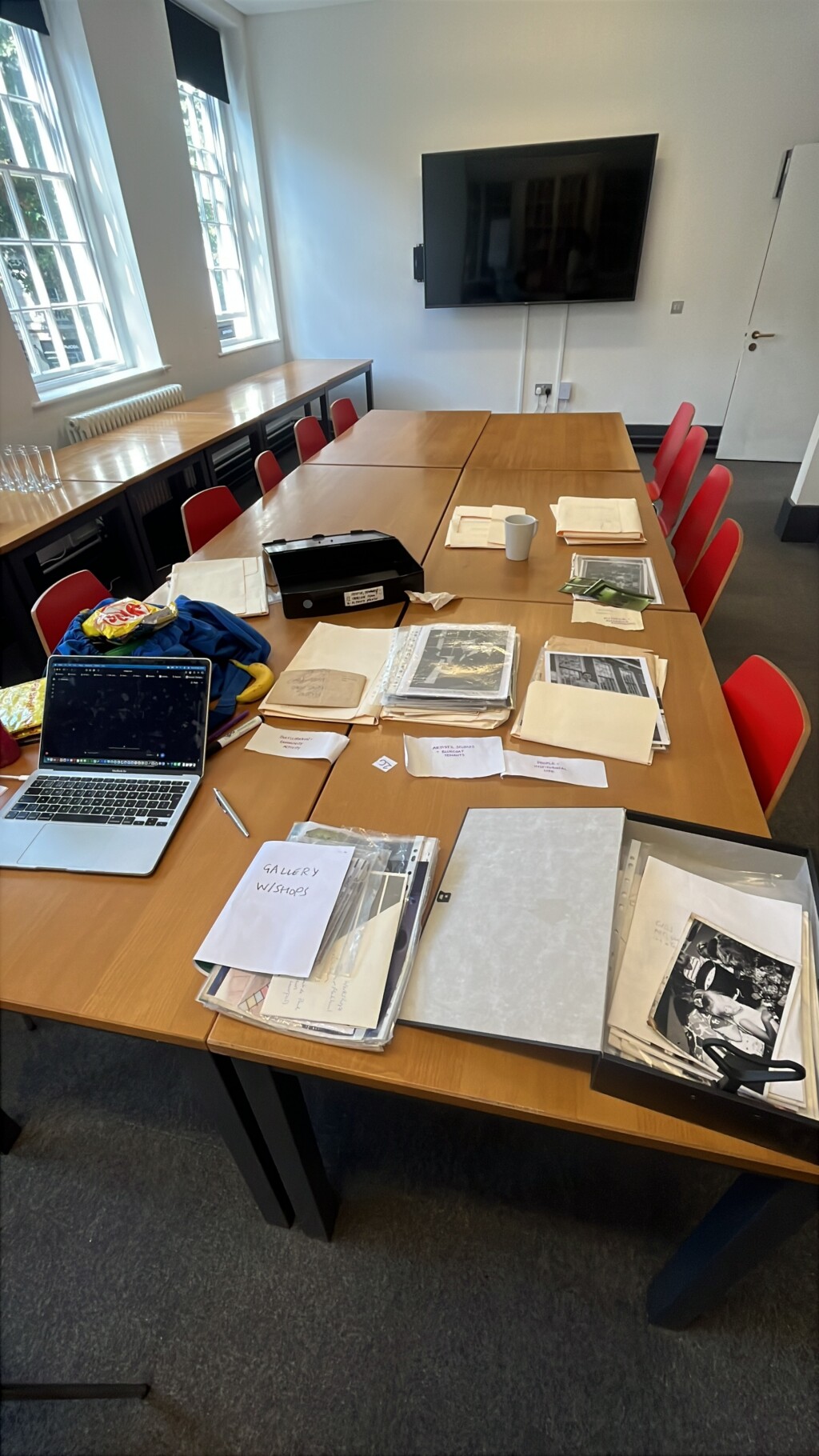
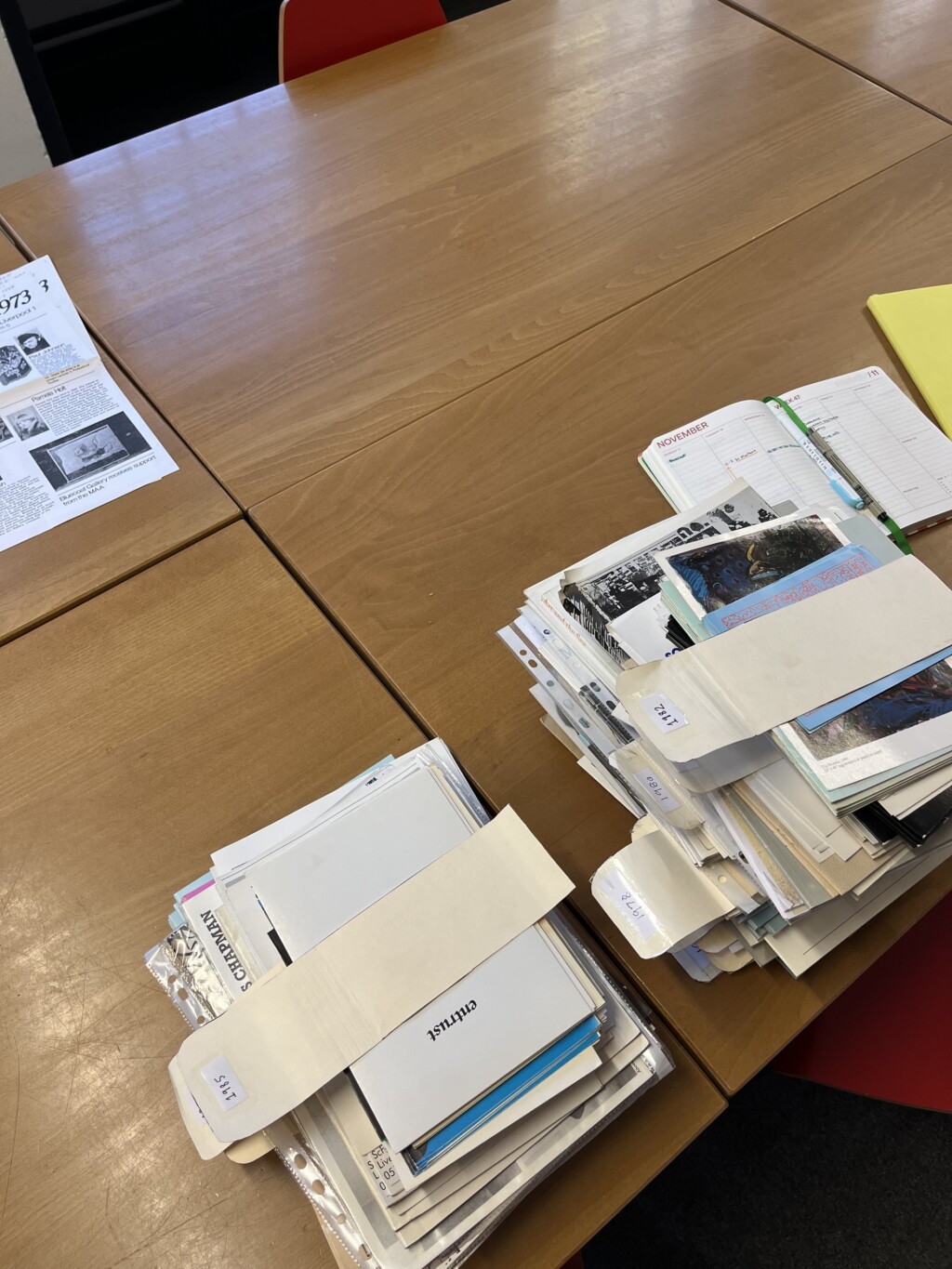
Since getting the arrangement settled, I’ve been working back through the collection, grouping related material together, creating descriptions and reference numbers, and getting everything ready for its eventual rehousing and digitisation.
Interesting finds
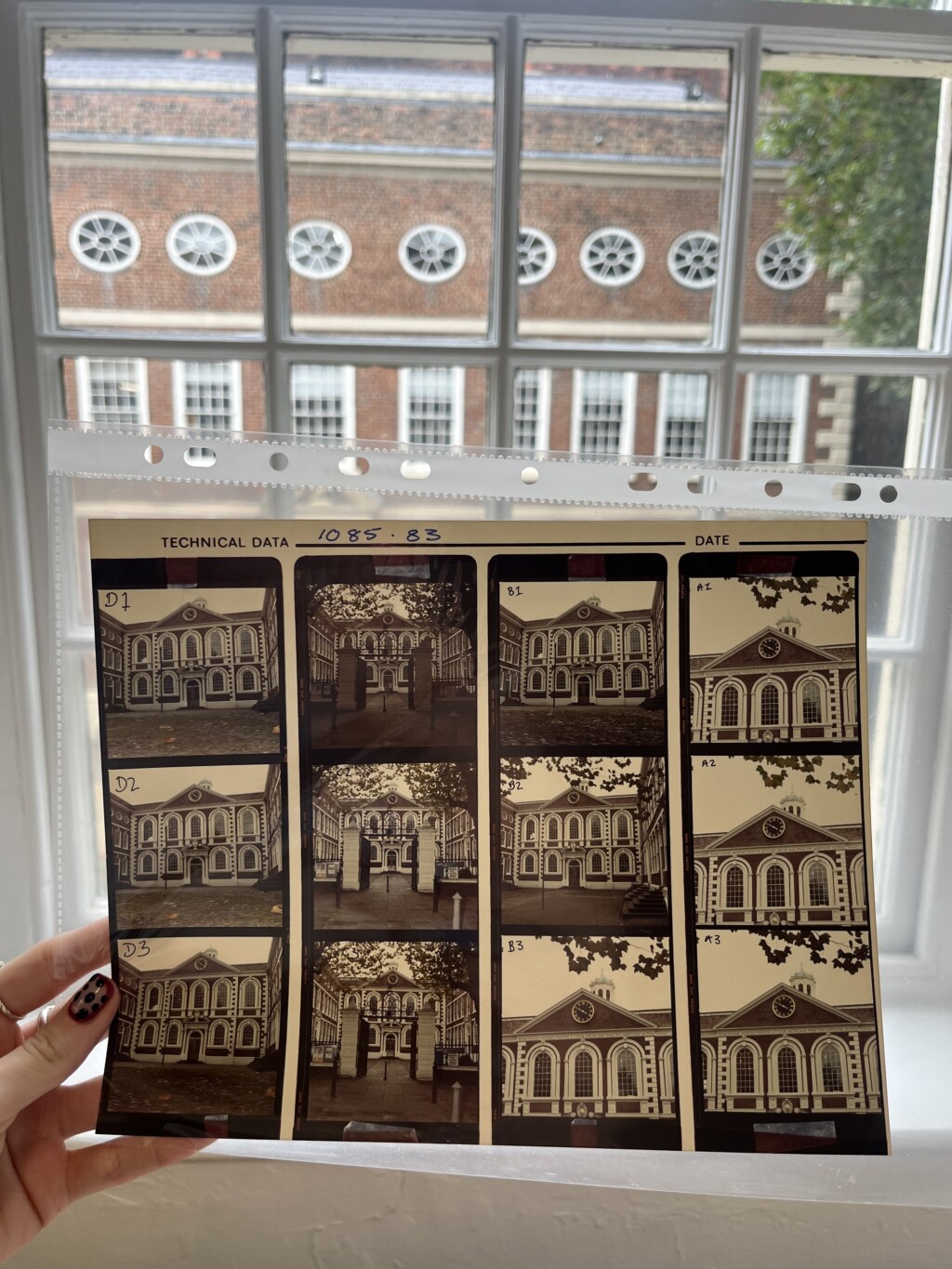
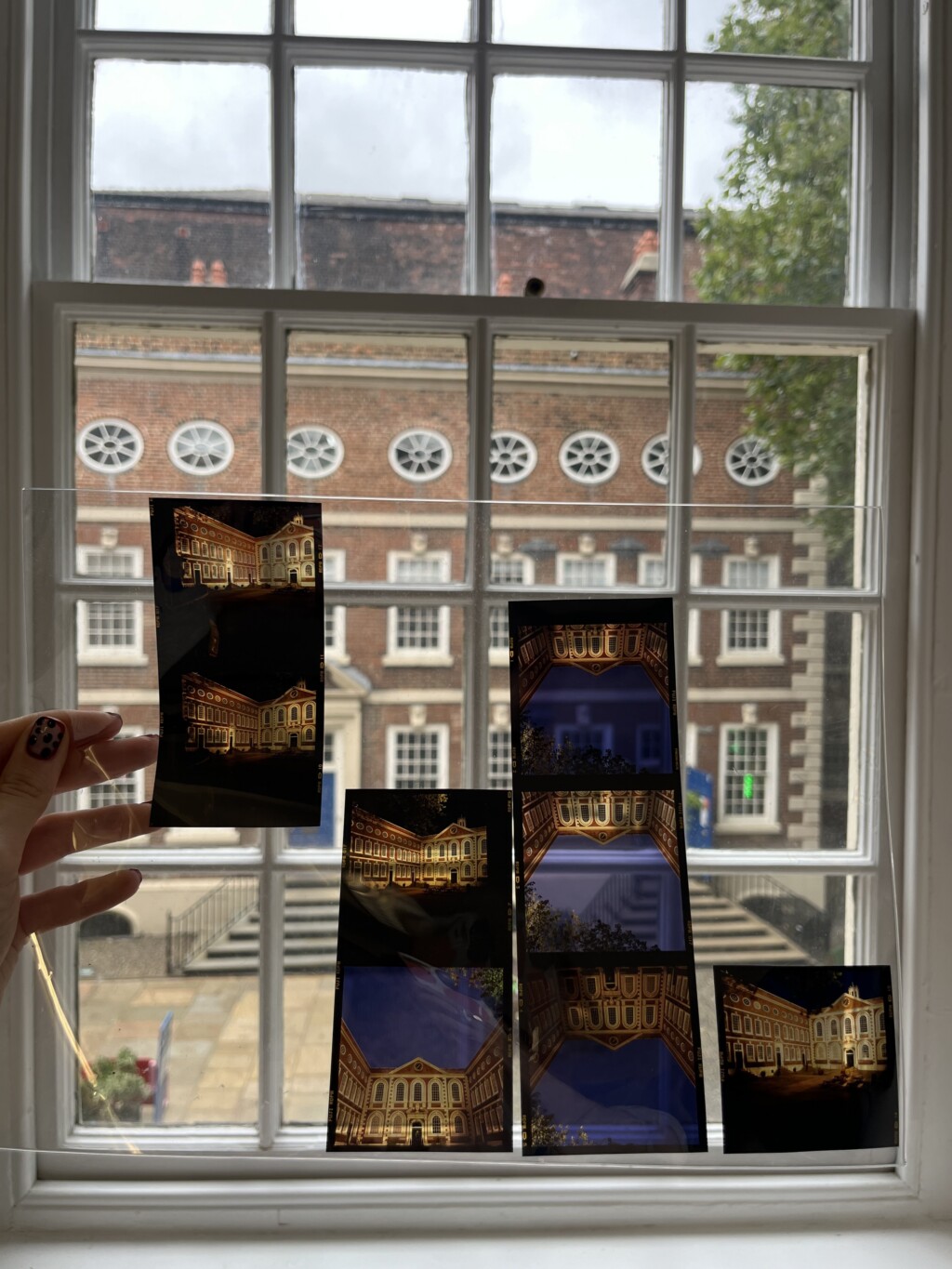
Some of the biggest jobs have also been the most rewarding! This summer I worked through Bluecoat’s extensive photographic and slide collections, uncovering images of exhibitions, performances, artists, people, and the building itself. There’s something very satisfying about coming across an unidentified image and gradually connecting it to a person, event, or organisation elsewhere in the archive.
And, of course, there have been plenty of unexpected discoveries. There’s almost always another box, cupboard, or folder somewhere that nobody has thought about for a while!
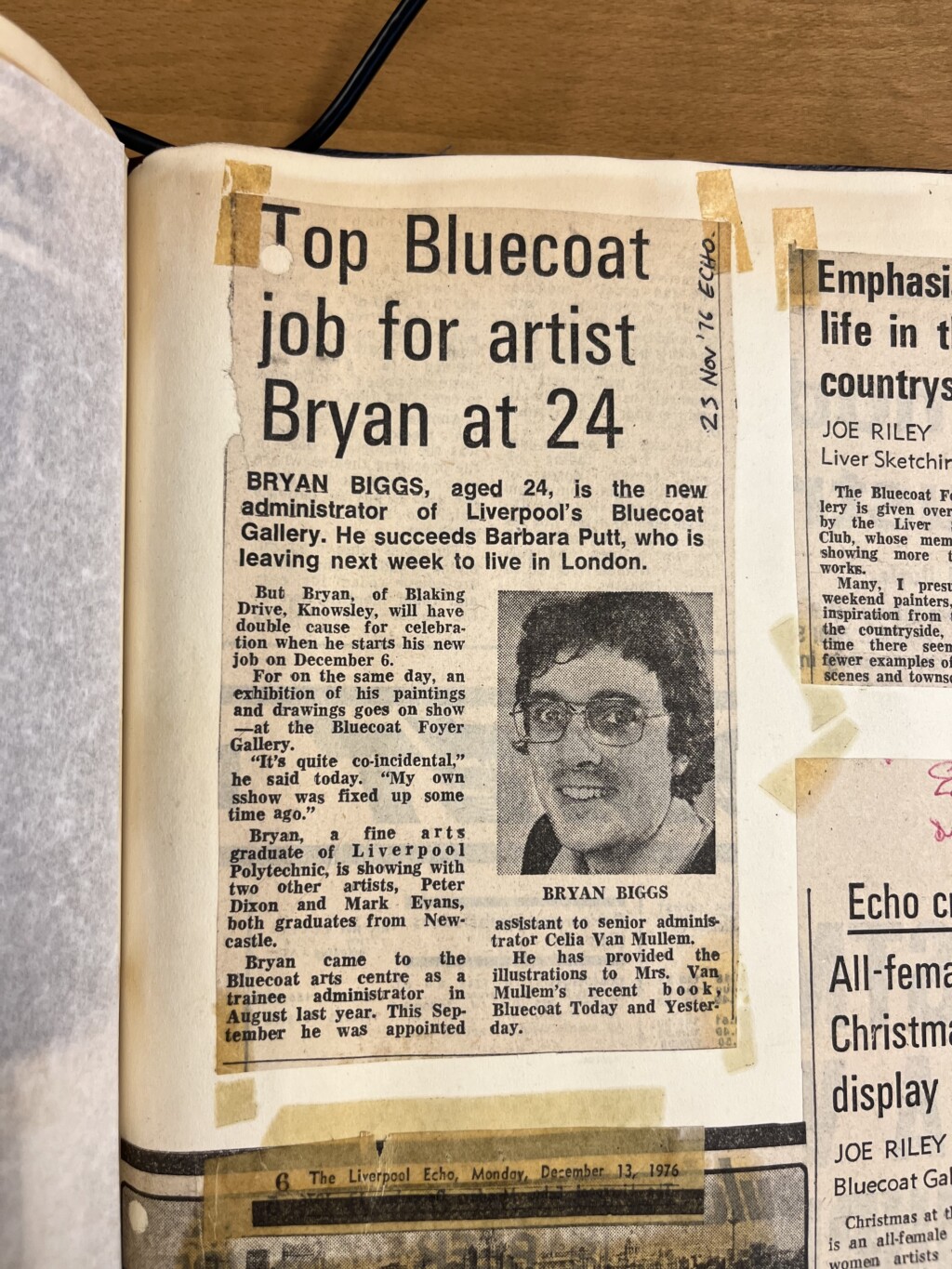
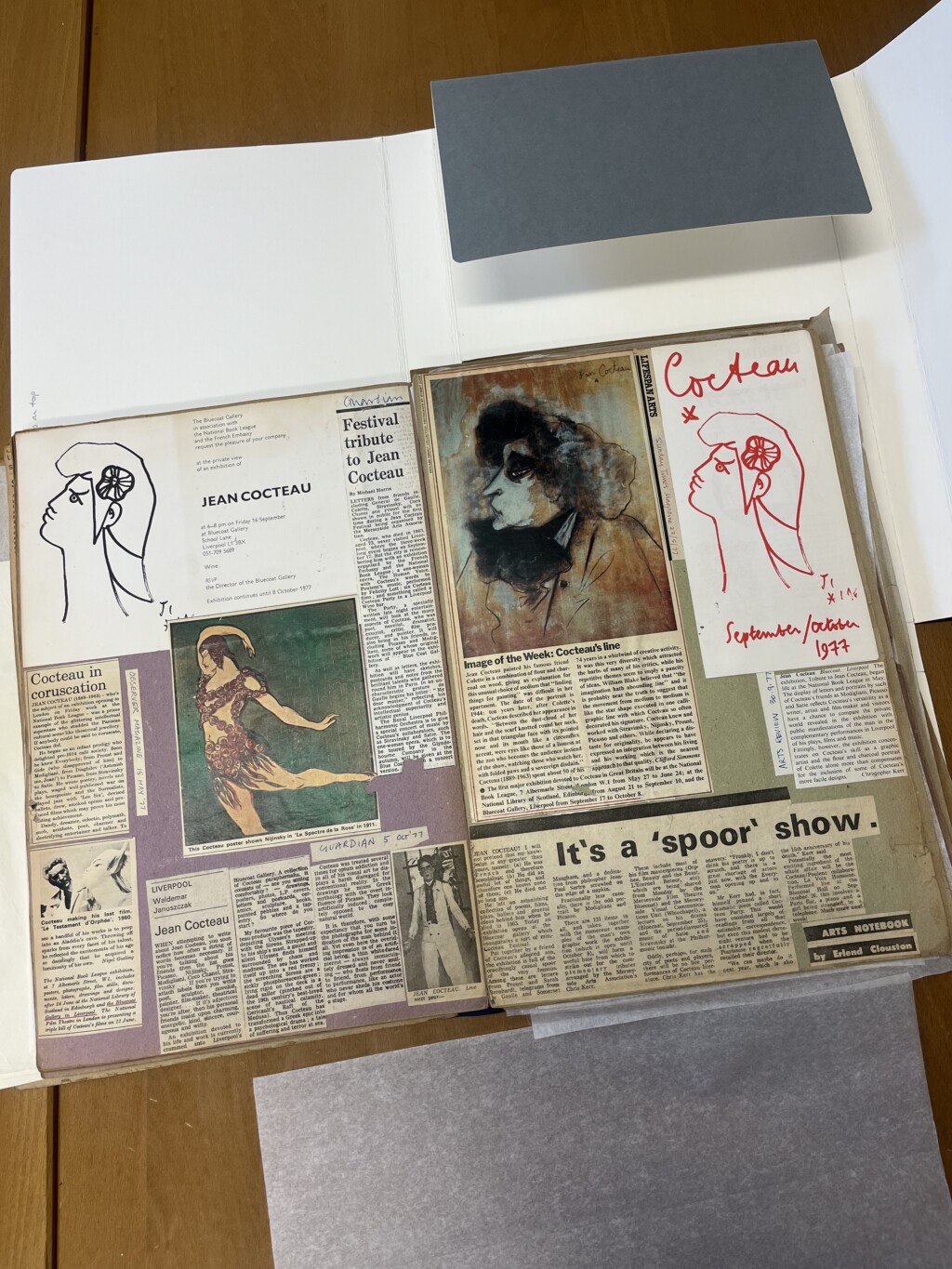
The press archive is a treasure of the collection - bound scrapbooks full of press cuttings, carefully cut from newspapers with the date and publication handwritten by an unknown member of staff. One of our largest volumes begins in 1926 and documents the campaign to save the Bluecoat building following the death of its owner, Lord Leverhulme, in 1925. Through the cuttings, you can follow the Sandon Studios Society and Liverpool’s wider creative community campaigning to raise the money needed to secure the building’s future. Their efforts ultimately led to the establishment of the Bluecoat Society of Arts in 1927 and the beginnings of the Bluecoat as the UK’s first arts centre.
Opening up the archive
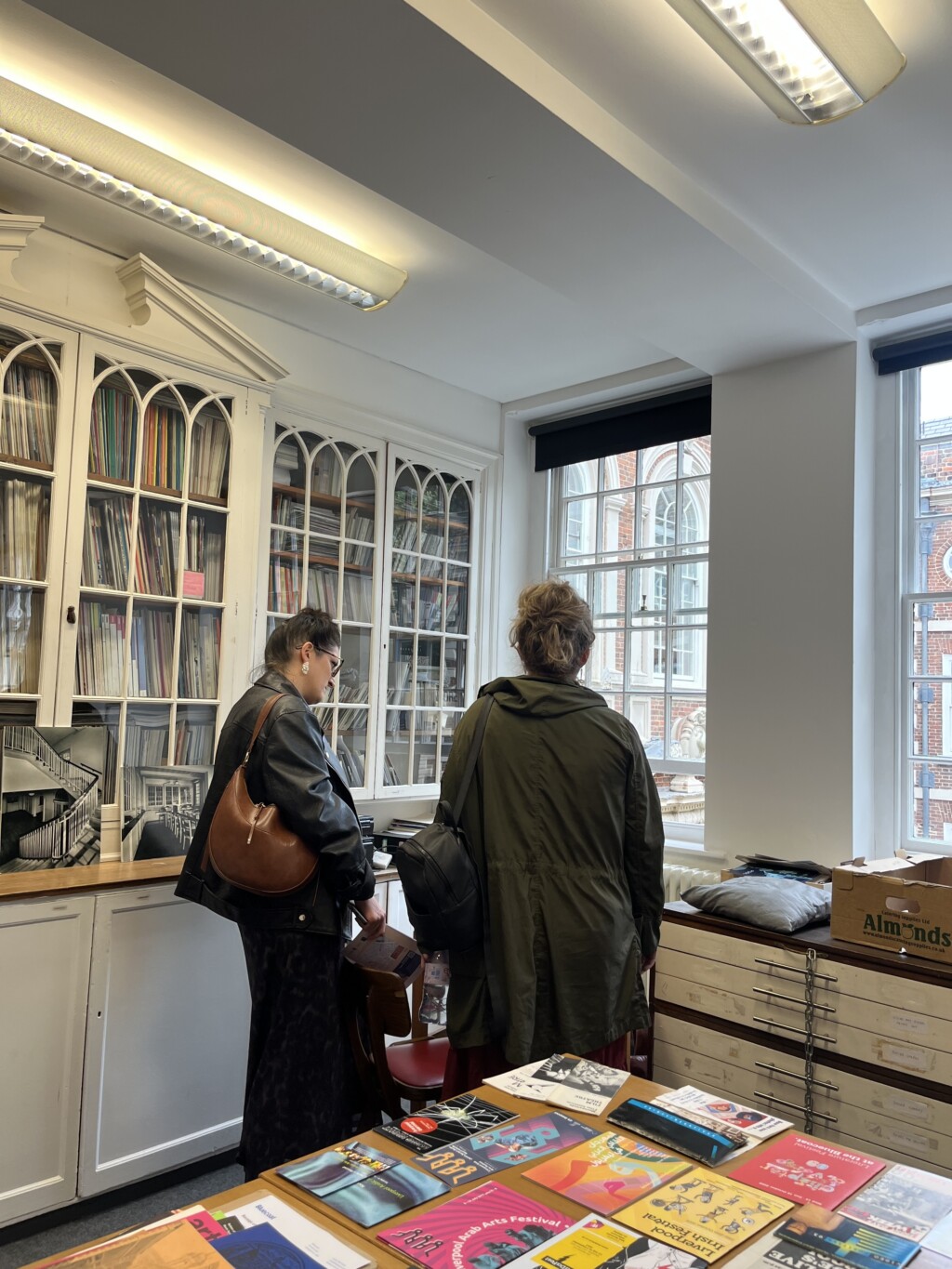
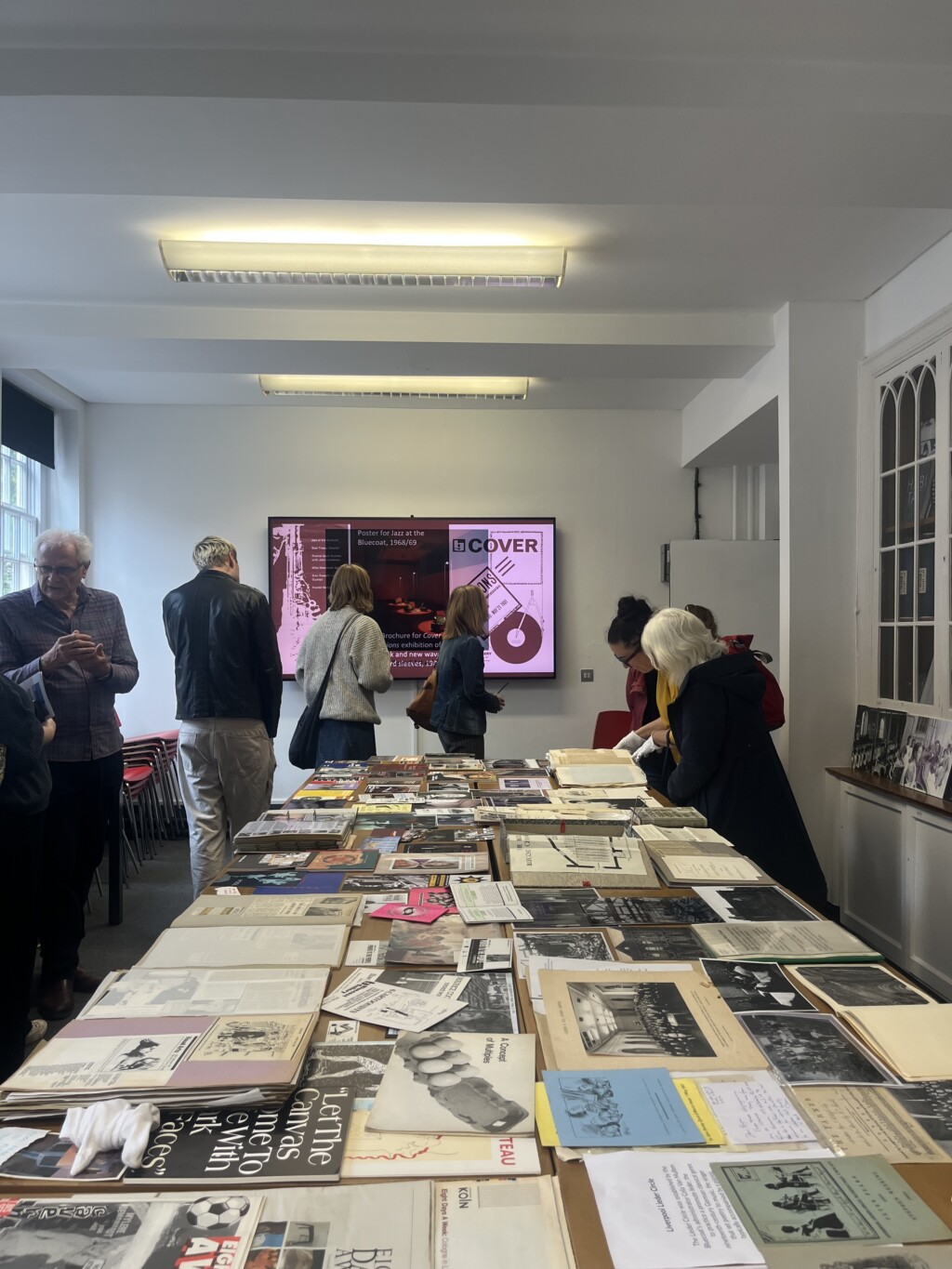
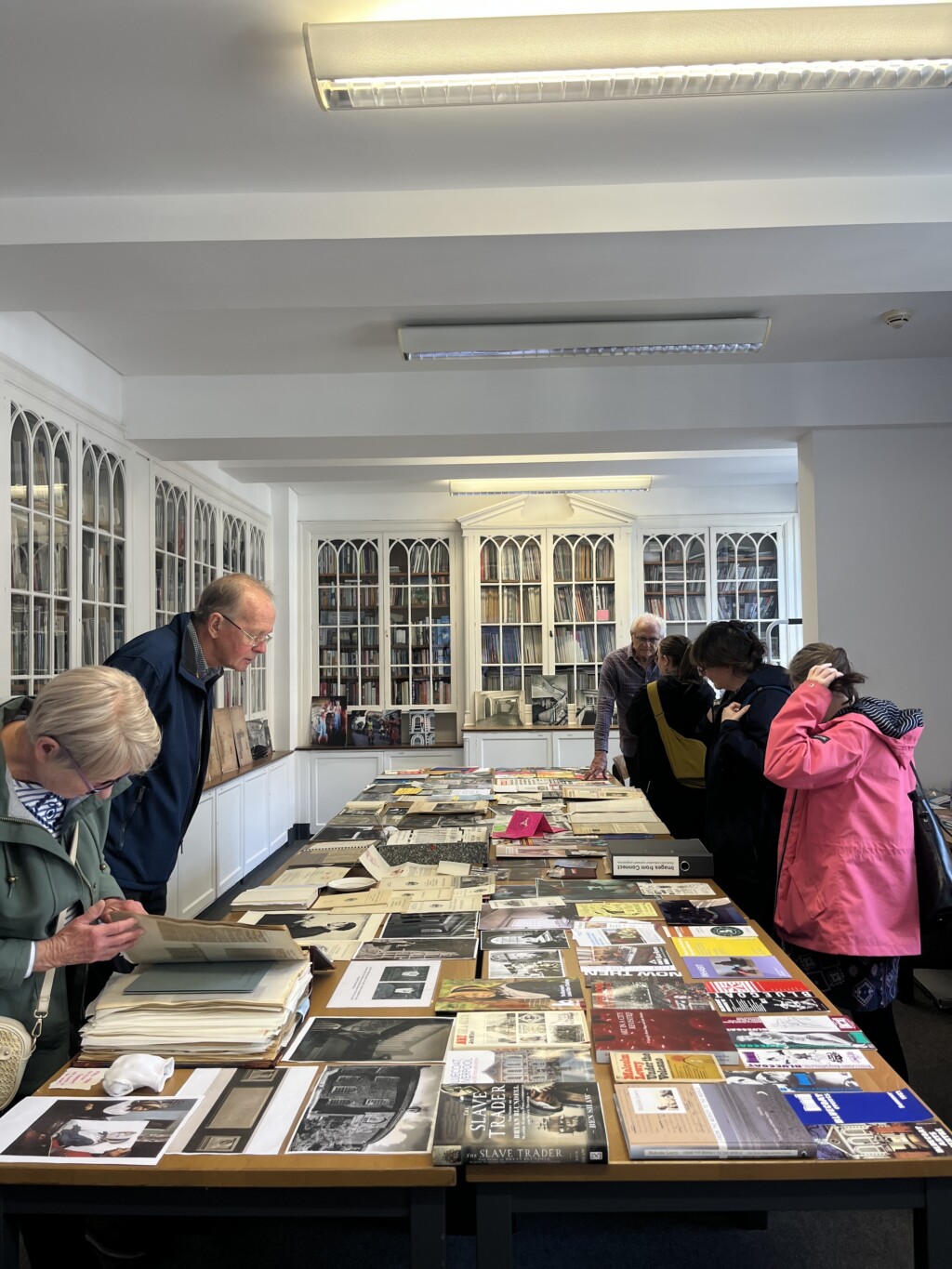
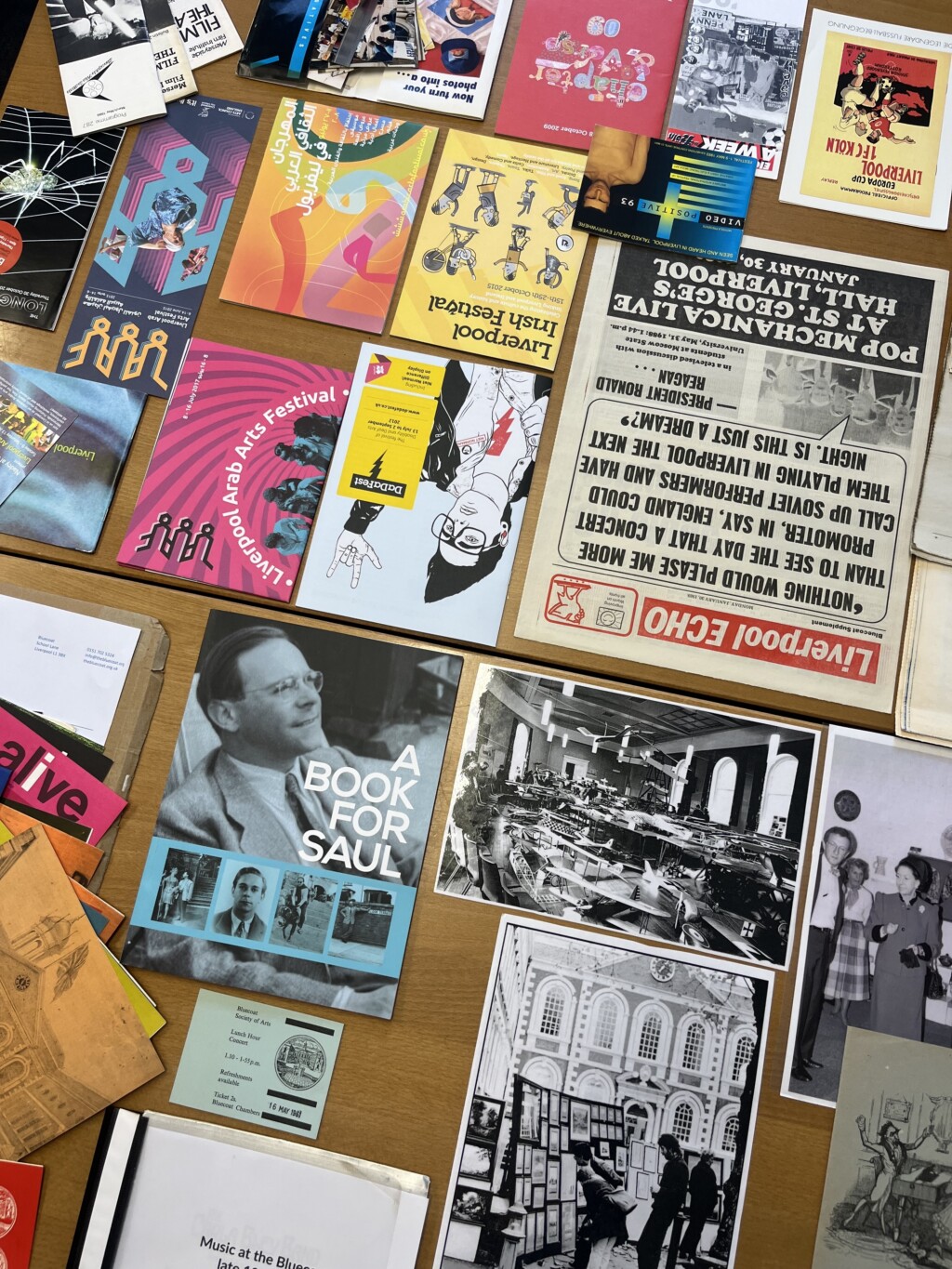
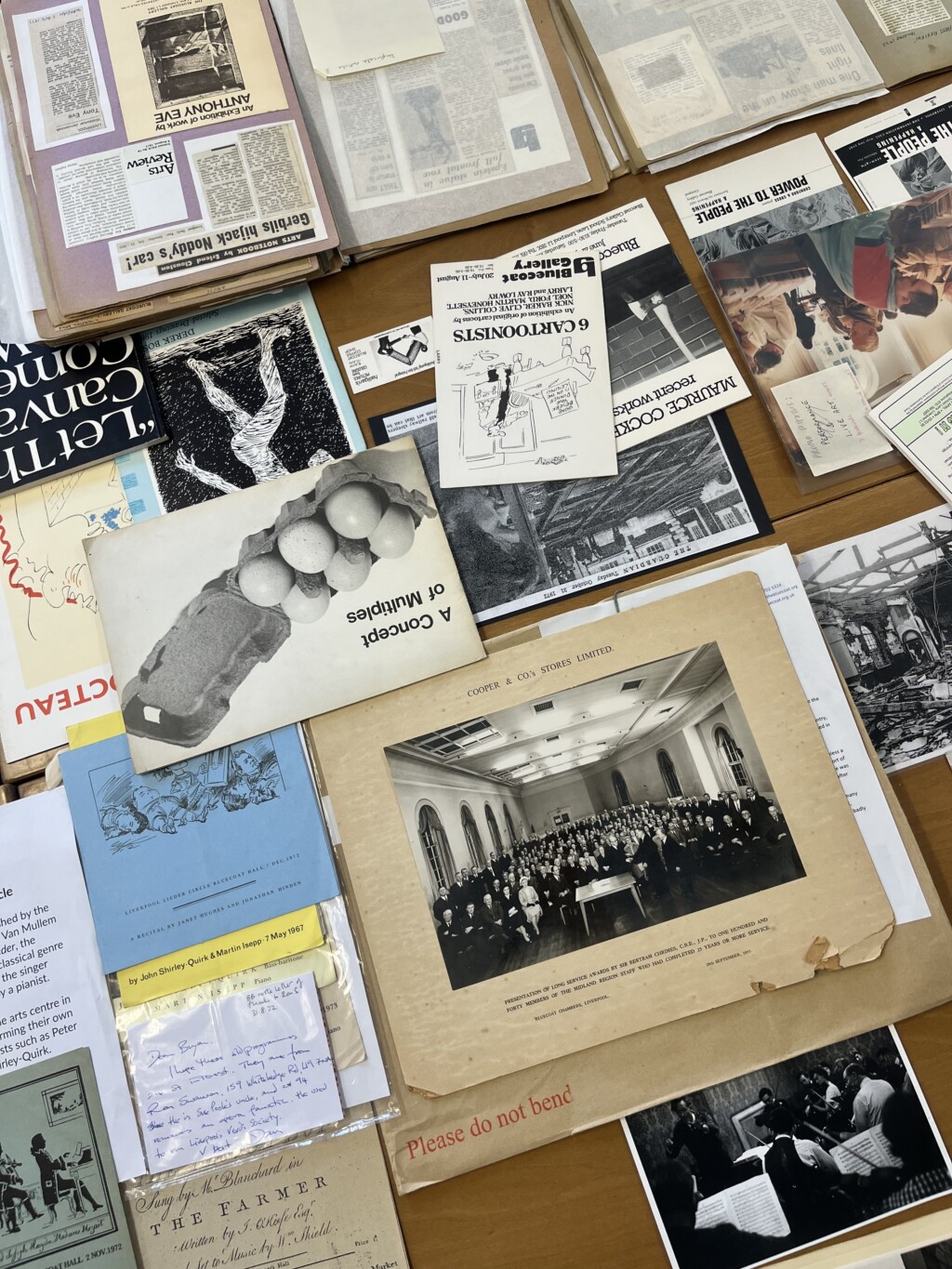
After spending so much of the year getting to know the collection behind the scenes, one of the nicest moments came this month when we held an archive drop-in at Bluecoat as part of Heritage Open Days.
We welcomed over 100 visitors and had some lovely conversations about everything from the Merseyside Film Institute and Bluecoat’s cultural exchanges with Cologne to the building’s architecture, wartime bomb damage, and some of the artists who have called Bluecoat home throughout its history.
It was lovely to see people exploring the material, sharing memories, and making connections with things I’d spent months cataloguing. It was also a reminder of what the project is seeking to achieve - making Bluecoat’s history easier for people to find, explore, and use.
What's next?
There are still a few busy months ahead. I’ll be finishing the catalogue, working with volunteers on rehousing and digitisation, and getting records ready for their eventual move to Liverpool Record Office. We’ve also got some exciting events planned for the final few months, giving people more opportunities to explore the collection and helping us think about how the archive can play a key part in Bluecoat’s arts centre centenary next year! Almost a year after I first started opening boxes and working out exactly what we had, the archive is gradually coming together, although I’m fairly certain there are still a few surprises hiding in the building before I finish.
The Bluecoat's Archives Revealed project is funded by: